


In the article
Last Updated on 07/01/2026 by Tony Abrahams
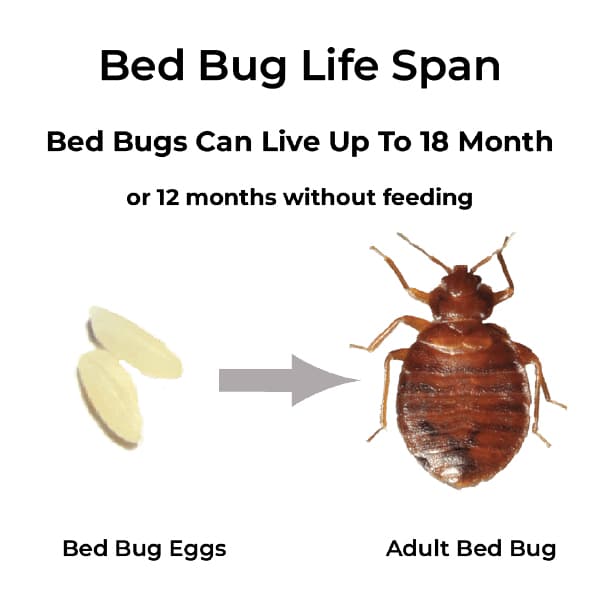
Adult bed bugs can survive for over a year without a blood meal and up to around 18 months if they have fed, especially in cooler conditions. Young nymphs usually only last a few weeks to a few months without feeding. If you’re wondering “how long do bed bugs live?”, understanding their life span is the first step to getting rid of them for good.
TL;DR: Adult bed bugs can live for 6–18 months depending on temperature and access to blood meals. In cool conditions, they can survive for over a year even without feeding. Young nymphs are more fragile and usually only survive for weeks to a few months. This is why leaving a room empty almost never solves a bed bug problem on its own.
In this guide, we’ll break down the full bed bug life cycle, what affects their life span, how long bed bugs live without feeding, and what this means for effective DIY treatment using long-term, non-toxic methods.
How Long Do Bed Bugs Live? Understanding The Life Cycle of Bed Bugs
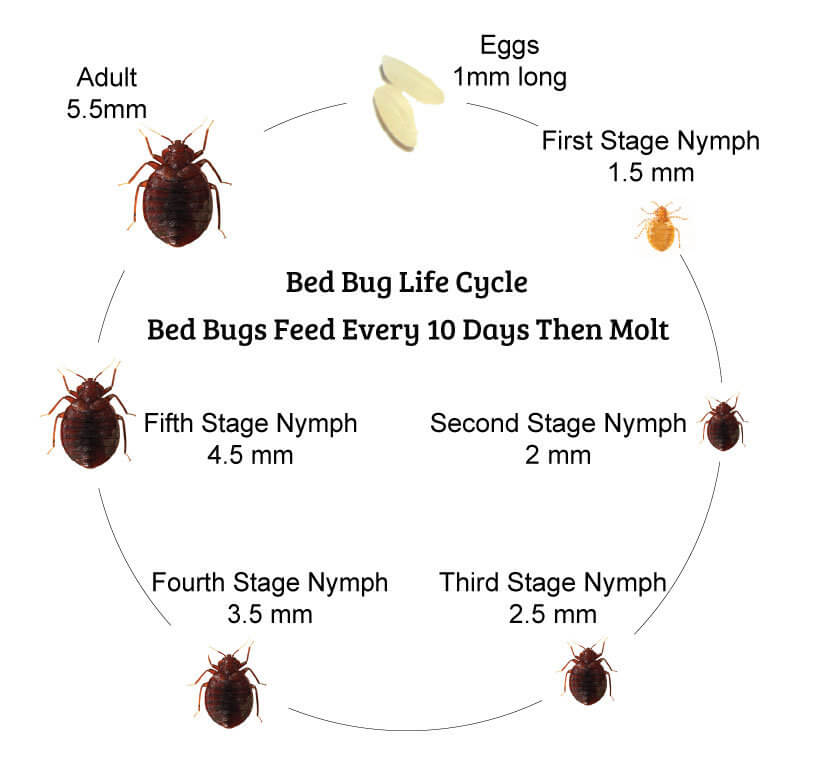
The 7 stages of the bed bug life cycle
Bed bugs go through several stages from egg to adult. Each stage needs at least one blood meal to move to the next stage, and the whole process can be surprisingly fast in the right conditions.
| Life Stage | Description | Typical Duration |
|---|---|---|
| Egg | Tiny, white, and oval. Glued into cracks, seams, and crevices. | 6–10 days |
| Nymph (1st instar) | Just hatched, almost see-through and pinhead-sized. Needs a blood meal to grow. | 5–10 days after feeding |
| Nymph (2nd instar) | A bit bigger and slightly darker. Still very flat and hungry. | 5–10 days after feeding |
| Nymph (3rd instar) | Growing quickly with each moult. Easier to see after a blood meal. | 5–10 days after feeding |
| Nymph (4th instar) | Almost adult-sized but not yet sexually mature. | 5–10 days after feeding |
| Nymph (5th instar) | Final nymph stage, looks like a small adult. One more feed before becoming fully mature. | 5–10 days after feeding |
| Adult | Fully grown, able to reproduce. Can live 6–18 months depending on conditions and access to blood meals. | 6–18 months |
A single female bed bug can lay up to 500 eggs in her lifetime. In warm rooms with regular feeding, bed bugs can go from egg to adult in around one month. In cooler conditions or when food is harder to find, every stage slows down and they live longer overall.
Read more about the full bed bug life cycle and how quickly infestations build up.
What Affects A Bed Bugs Lifespan?
The time from egg to adult bed bug depends on environmental conditions.
Two main factors decide how long bed bugs survive:
- The environment they live in (especially temperature)
- How often they can feed on a host
Environmental Conditions
Bed bugs are tough, but they still have their “comfort zone”. Their lifespan and activity level change a lot depending on temperature and shelter.
- Temperature: Bed bugs are most active between 20°C and 30°C. In this range, they feed and reproduce quickly and typically live for 12 months. In cooler conditions, they slow down and can survive for longer, sometimes over a year, even with fewer feeds.
- Cold: Below roughly 12–15°C, bed bugs can go into a type of dormancy. They move less, eat less, and this can extend their life span while they wait for a warm-blooded host to return.
- Heat: High heat is deadly. Once temperatures go above about 45–50°C and are held long enough, bed bugs and their eggs die. This is the principle behind professional heat treatments and hot washing.
- Shelter: Bed bugs hide in seams, cracks, screw holes, bed frames, skirting boards and furniture. These hiding spots shield them from sudden temperature swings and make chemical-only treatments harder to rely on.
| Environmental Condition | Effect on Bed Bug Lifespan |
|---|---|
| Ideal room temperature (20–30°C) | Fast life cycle, active feeding and breeding, lifespan usually several months. |
| Cooler temperatures (< 15°C) | Slows them down and can prolong survival, sometimes over a year, even with little or no feeding. |
| High heat (> 45–50°C) | Often lethal to bed bugs and eggs if maintained long enough. |
If you’re wondering how long bed bugs live in an empty room or vacant house, the answer is: a lot longer than you think. In cooler conditions with good hiding spots, adults can simply wait.
Feeding Habits
Blood meals are everything for bed bugs. They need blood to grow, reproduce, and stay alive.
- Feeding frequency: Bed bugs usually feed every 5–10 days when a host is regularly available. After feeding, they return to hiding while they digest.
- Host availability: Bed bugs are attracted to body heat and carbon dioxide. In bedrooms, host availability is usually high, so they tend to feed routinely and reproduce quickly.
- Starvation survival: In cool conditions, adults may survive for many months without feeding. Nymphs are less hardy. If it’s warm and they can’t find a host, they die more quickly.
| Feeding Habit / Situation | Effect on Lifespan |
|---|---|
| Regular feeding (every 5–10 days) | Supports fast growth, breeding, and a typical lifespan of several months. |
| Infrequent or interrupted feeding | Slows development, can reduce breeding but may still allow survival for months. |
| No host in cool conditions | Adults may survive for over a year by going semi-dormant. |
| No host in warm conditions | Higher activity and metabolism mean they die faster without a blood meal. |
If you’d like to understand how they got into your home, this guide explains the typical pathways: How did I get bed bugs?
Bed Bug Bites and Skin Reactions
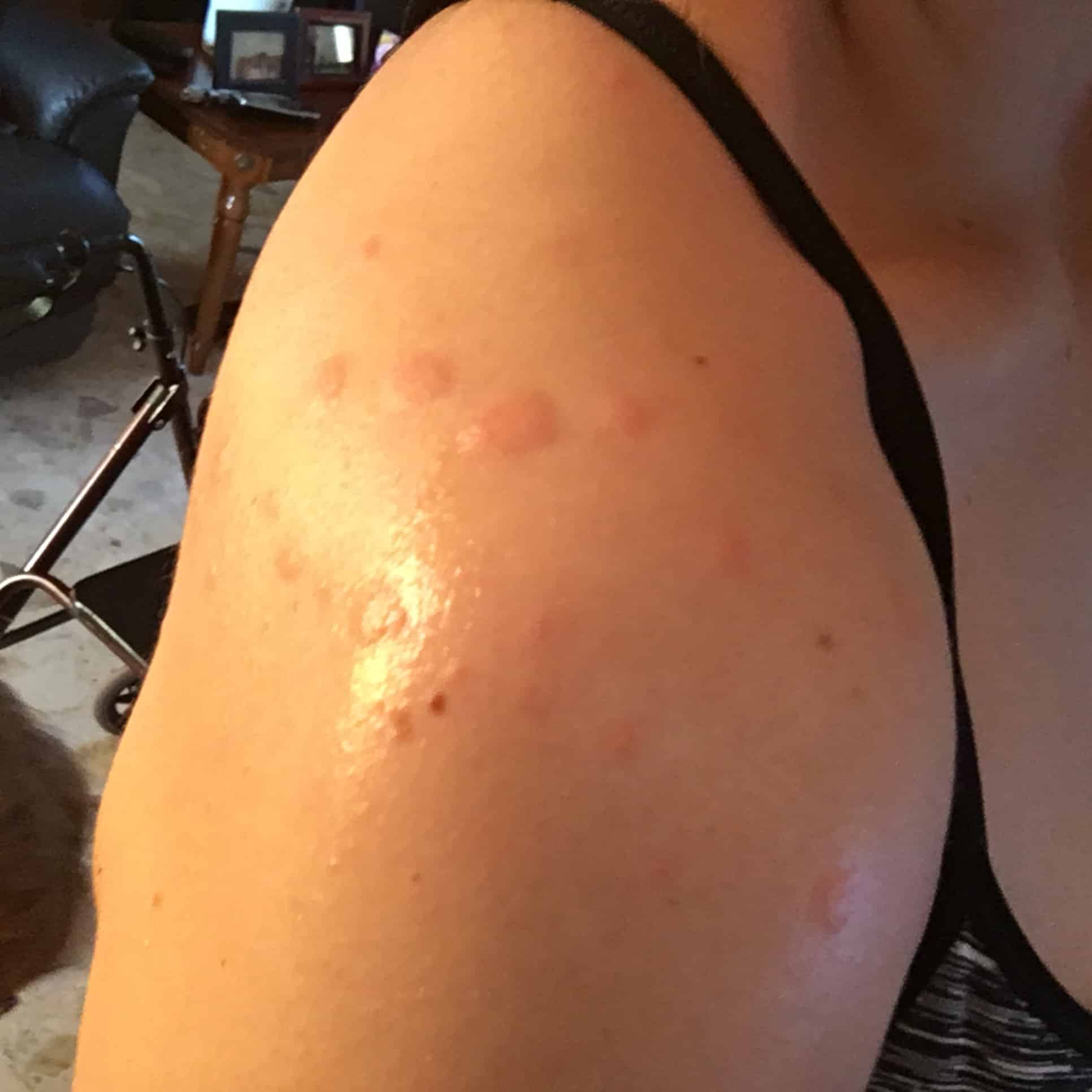
Bed bug bites can appear in clusters or lines on exposed skin
Bed bug bites are often the first sign people notice. Unfortunately, they’re also easy to confuse with other insect bites or skin conditions.
- Itchy red bumps: The most common reaction – small red bumps, often in clusters or lines on exposed skin such as arms, legs, back, and neck.
- Swelling and inflammation: Some people develop more noticeable swelling around each bite.
- Allergic reactions: A smaller number of people can experience larger welts, intense itching, or more severe reactions.
| Symptom | Description |
|---|---|
| Itchy red bumps | Small, raised, itchy bites, often in patterns or clusters. |
| Swelling and inflammation | Noticeable swelling around bite sites, may feel warm or tender. |
| Allergic reactions | Larger welts, intense itching, or more severe hypersensitivity in some people. |
If you’re dealing with bites and live in Victoria, our guide Bed Bugs Melbourne: Get Rid of Bed Bugs Fast and Forever walks you through practical options.
How to Prevent Bed Bugs From Infesting Your Home
Nobody wants bed bugs moving in. A few simple habits can make your bed and bedroom far less attractive to them.
- Inspect regularly: Check mattress seams, bed slats, headboards, and furniture around the bed for droppings, shed skins, or live bugs.
- Declutter: Less clutter means fewer hiding spots. Tidy around beds, skirting boards, and under furniture.
- Use protective covers: Fit quality bed bug-proof mattress covers and pillow protectors. These trap existing bugs inside and make new infestations easier to spot.
- Dust the bed frame and bed legs with DE powder: Applying a light coating of Bed Bug Killer Powder (DE) to the bed frame, slats, and around the bed legs creates a long-term barrier.
Any bed bug trying to reach you must crawl across the powder, which dries them out and kills them. This is a powerful prevention step, especially when combined with mattress encasements. - Travel smart: When staying in hotels or Airbnbs, inspect the bed and headboard before you unpack.
Keep your suitcase off the bed and floor, and check your luggage before bringing it back into your home. - Laundry care after travel: After a trip, wash and dry clothes and bedding on high heat.
High temperatures kill bed bugs and eggs hiding in fabric. - Seal cracks: Seal gaps in walls, floors, and furniture joints to reduce movement paths and hiding spots.
Want more background? Our guide on where do bed bugs come from? explains how they hitchhike into homes, hotels, and short-stay rentals.
How to Get Rid of Bed Bugs for Good Using The Isolation Method

Install mattress covers to complete The Isolation Method
Because adult bed bugs can survive for many months – and sometimes over a year in the right conditions, “waiting them out” almost never works. A successful treatment has to do three things:
- Kill the bed bugs you can see and the ones still hiding
- Deal with eggs and multiple future generations
- Provide long-term protection so they can’t come back
That’s exactly why we use the Isolation Method. Instead of chasing bed bugs around the whole room, you turn your bed into a safe zone that bed bugs simply can’t access without crossing a long-lasting bed bug killer first.
What Is the Isolation Method?
The Isolation Method is a simple but powerful system:
- Encase the mattress using a quality bed bug mattress cover so bed bugs already inside the mattress are trapped and can’t feed or escape.
- Kill instantly where you can using a handheld steam on seams, cracks, and frames to destroy live bugs and eggs on contact.
- Apply a long-term bed bug killer powder such as our APVMA-approved Bed Bug Killer Powder to the bed frame, legs, and key hiding areas.
- Isolate the bed using bed bug barriers and correct positioning so the only way to reach you is by crossing the powder.
Once the bed is isolated, you can actually sleep in it the same night. Every hungry bed bug left in the room will eventually come looking for a blood meal. But now, they must cross the powder to reach you… and that’s where they die.
Why the Isolation Method Works Better Than Standard Treatments
- It turns the bed into the solution instead of the problem, no more being the food source without defence.
- It kills bed bugs over time, including new hatchlings, because the powder keeps working for years where it’s applied.
- You don’t have to spray your whole room with harsh chemicals again and again.
- You keep sleeping in your own bed instead of abandoning the room and letting bed bugs spread further.
- It’s cost-effective compared to repeated pest control visits or whole-room heat treatments.
- It’s organic and safe when used correctly around people and pets.
Why “Wait and See” or Quick Sprays Fail
Short-term sprays only kill bed bugs they contact directly. Anything hiding deeper in cracks, walls, or inside furniture survives, including eggs. And because bed bugs can live so long without feeding, they simply wait… then return later.
With the Isolation Method, you don’t rely on luck. You set up a system where bed bugs must cross a permanent, long-acting killer if they want to reach you. Over the following weeks, the infestation collapses, not because you chased them, but because they can’t avoid the barrier.
With the Bed Bug Barrier DIY treatment system, you focus on protecting the bed first rather than trying to treat every square inch of the room. This is how you beat their long life span without endless retreatments, toxic chemicals, or sleepless nights.
Frequently Asked Questions: How Long Do Bed Bugs Live?
- How long do bed bugs survive without a host?
Adult bed bugs can survive for over a year without a blood meal in cool, sheltered conditions. Young nymphs are less resilient and usually only last weeks to a few months without feeding. - Do bed bugs ever go away on their own?
No. Bed bugs do not simply move on or disappear. If they have access to a host, they keep feeding and breeding. If they don’t, some can wait a very long time. Effective treatment is the only reliable way to eliminate them. - Is it possible to only have a few bed bugs?
Yes. In the very early stages of an infestation, you may only have a handful of bugs. But because a single female can lay hundreds of eggs in her lifetime, a “small” problem can become a large one very quickly if you do nothing. - How long can bed bugs live in an empty house or unused room?
In an unoccupied but cool room with good hiding places, adult bed bugs can survive for many months, sometimes over a year. This is why simply locking up a room usually doesn’t work as a control method. - How long do bed bugs live after treatment?
If you use short-term sprays, any surviving eggs or missed bugs can live on and restart the infestation within weeks. With a long-lasting solution like Bed Bug Killer Powder applied correctly around the bed and hiding spots, the powder keeps killing for years, so newly hatched bugs can’t survive long enough to rebuild the population.
By following these tips and using the right DIY bed bug treatment, you can beat the long bed bug life span and keep your home bed bug-free and comfortable.
Watch Our DIY Treatment Video for an Ensemble
Watch Our DIY Treatment Video for a Bed Frame
If you have enjoyed our blog, How Long Do Bed Bugs Live?, then you might like to read our blog about smells bed bugs hate and how they can help with bed bug prevention.
Sources: How Long Do Bed Bugs Live?
- Department of Health WA
- Oxford Academic (Perspectives on Biology and Management)
- National Library of Medicine (Clinical Relevance and Control Options)

Tony pioneered a non-toxic, eco-friendly solution for bedbug infestations. His innovation won the ABC TV show “The New Inventors” in 2009. In 2012, he successfully registered Diatomaceous Earth for bedbug control in Australia.




Leave a Reply