


In the article
Last Updated on 16/01/2026 by Tony Abrahams
Bed Bugs On Trams and Trains sounds like one of those paranoid Google searches… until you realise how bed bugs actually spread. They don’t “live” on trams or trains like cockroaches do in drains. They hitchhike. And public transport is basically a moving collection of soft seats, backpacks, jackets, and people rotating in and out all day.
So yes, it can happen. Is it common? Usually not. But it’s possible enough that it’s worth knowing what to do, without spiralling into panic-cleaning your entire house at 2am.
TL;DR: Bed Bugs On Trams and Trains
- Bed bugs can end up on trams and trains by hitchhiking on bags, clothing, and soft items.
- They are more likely to hide in fabric seams and cracks around seats than crawl around in the open.
- If you pick one up, the main risk is bringing it home and letting it reach your bed.
- A calm response beats overreacting: inspect, isolate, and set up a simple barrier so you can sleep safely.
Can Bed Bugs Really Be On Trams and Trains?
Bed bugs can hitchhike on trams and trains by hiding in bags, clothing, and fabric seat seams.
Yes, in the same way they can be in hotels, cinemas, planes, taxis, waiting rooms, or anywhere people sit for a while. Bed bugs don’t fly. They don’t jump. They’re not hunting you across the carriage like tiny predators.
They’re opportunists. If a bed bug ends up in a handbag, a laptop sleeve, a jacket pocket, or a folded scarf, it can get carried onto public transport without anyone noticing.
Bed Bug Facts: Signs, Causes & How to Get Rid of Them Fast & Forever in 2026
How Do Bed Bugs Get On Trams and Trains?
Most of the time it’s one of these:
- Bags and backpacks that have been on an infested bed, couch, floor, or hotel room.
- Jackets and hoodies thrown on beds or upholstered furniture at home, then worn out.
- Luggage from travel (especially after flights, hotels, hostels, and Airbnbs).
- Second-hand items like a blanket, cushion, or jacket picked up cheap and used right away.
- Shared environments such as apartments, shelters, staff rooms, laundromats, or accommodation where bed bugs can move between people’s belongings.
To be honest, the transport part is usually the middle of the journey, not the start of it.
Where Do Bed Bugs Hide On Public Transport?
If a bed bug ends up on a tram or train, it’s going to prefer tight, dark, protected areas. Think:
- Seat seams and piping
- Under the edge of seat fabric
- Cracks where plastic meets metal
- Between seat backs and frame joins
- In and around floor trim gaps near the seat base
They’re built to wedge into tiny gaps. If you can slide a credit card in, a bed bug can often fit too.
Can You Bring Bed Bugs Home From a Tram or Train?

A bag left under a tram or train seat can accidentally pick up bed bugs hiding in seams and cracks.
Yes. The most common “pickup” scenario is simple: a bed bug gets into your bag or onto your clothing, then you take it home. From there it only needs one good outcome… a path to your bed.
The good news is you can cut that path off fast. You don’t need to treat your whole house like it’s contaminated. You just need to stop anything new from reaching your sleeping area while you check what’s going on.
Do Bed Bugs Bite You On Trams and Trains?
Sometimes, but it’s not the usual pattern. Bed bugs prefer feeding when humans are still for a long time. That’s why beds are their favourite. A moving, noisy tram with shifting bodies isn’t exactly ideal.
That said, if a bug is trapped in clothing and you’re seated for a while, bites can happen. And just to complicate things, bites alone are a messy clue. Some people react strongly, others barely react at all.
Bed Bug Bites in Australia: How to Find, Treat and Prevent Bed Bugs Fast
Signs You Might Have Picked Up Bed Bugs After Commuting
These aren’t “proof”, but they’re worth paying attention to:
- Itchy welts that appear later, often in lines or clusters (not always).
- Seeing a live bug on clothing, bag, or seat (rare, but it happens).
- Unexplained bites that start after travel or commuting routines change.
- New specks or smears on sheets or mattress seams (tiny dark spotting can be a sign).
If you want certainty, visual identification beats guesswork. If you have a photo, use our “submit a picture for identification” option on our homepage, so people don’t get stuck in bite-anxiety loops.
What To Do If You Suspect Bed Bugs After Catching Trams and Trains
Here’s the calm, practical version. Not the “burn your bedding” version.
1) Quarantine the risky items for a moment
- Keep your bag off the bed and off upholstered furniture.
- Put it in a bathroom, laundry, or on a hard floor while you check it.
2) Do a quick inspection (5 minutes, not 5 hours)
- Check seams, zips, and folds of the bag.
- Look along jacket cuffs, pockets, and hems.
- Use your phone torch. It’s surprisingly effective.
3) Heat-treat what you can
- Wash and hot-dry clothing (when fabric allows).
- For items that can’t be washed, a careful steam treatment can be helpful on seams and folds.
More Proven Tips on How to Prevent Bed Bugs at Home
How To Get Rid Of Bed Bugs If Your Home Becomes Infested: The Isolation Method
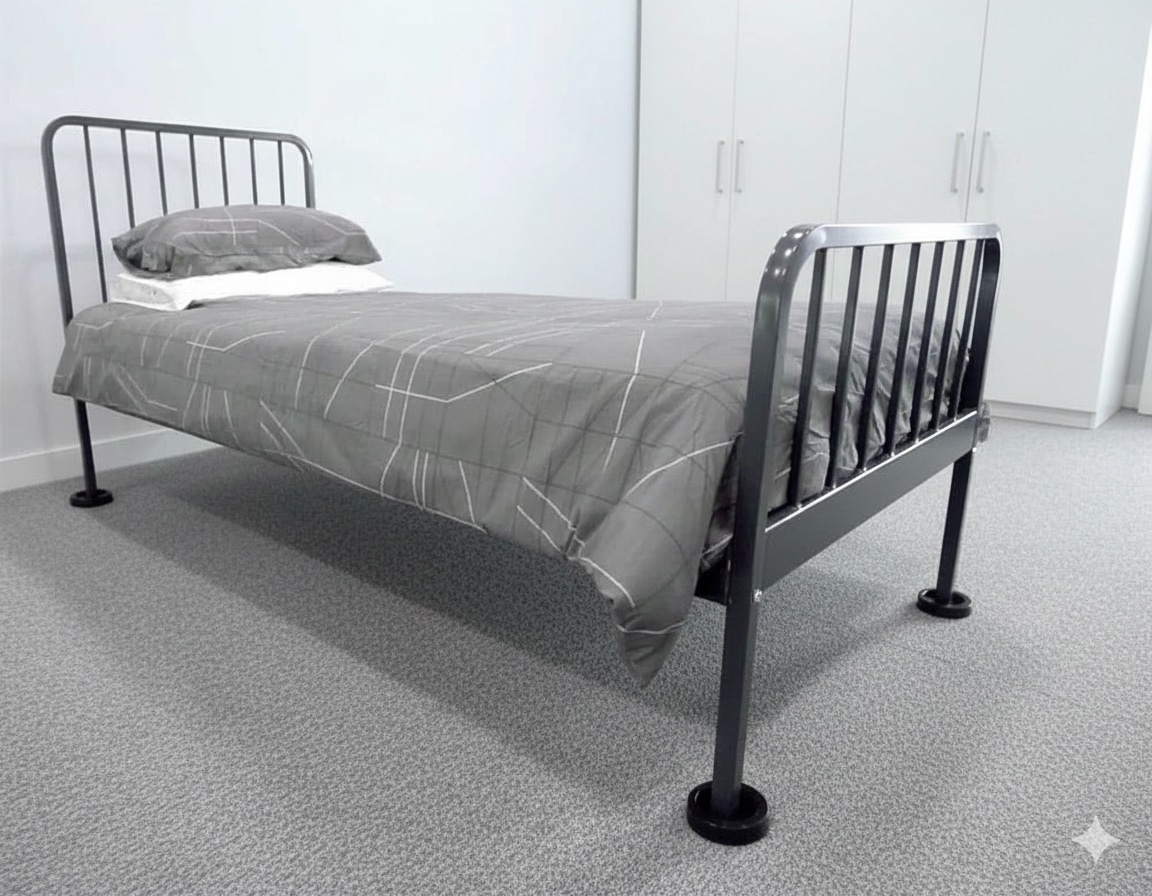
The Bed Bug Isolation Method gives instant protection from bed bugs in the room.
If you want the easiest way to beat bed bugs without turning your whole house upside down, this is it.
The Isolation Method works because it targets the one thing bed bugs must do to survive: reach you while you sleep. Instead of chasing them around every room with sprays and stress, you turn your bed into a controlled zone.
This is why it’s one of the fastest, simplest, and most affordable DIY treatments. You get instant bite protection, and the infestation fades out over the next few weeks as the bugs keep attempting to reach the bed.
Step-by-Step: How To Isolate Your Bed Properly
- Step 1: Move the bed away from everything
Pull the bed at least 30cm away from walls, bedside tables, and furniture so bed bugs can’t bypass your protection. - Step 2: Stop bedding touching the floor
Make sure sheets, blankets, and quilts don’t hang onto the floor, or bed bugs can use them like a ladder. - Step 3: Seal the mattress
Zip the mattress into a bed bug-proof mattress cover to trap bugs inside and stop the mattress becoming a hiding place. - Step 4: Steam the bed frame for instant kill
Use a bed bug steamer to kill bed bugs and eggs instantly on contact (focus on joints, cracks, screw holes and slats). - Step 5: Apply a fine dusting of powder for long-term control
Lightly dust the bed frame and travel paths using Bed Bug Killer Powder. Aim for a thin, barely visible layer, not piles. - Step 6: Install bed leg barriers or traps
Place bed bug barriers under every bed leg to stop bed access and prevent bites fast.
Why This Is The Best and Easiest Bed Bug Treatment
- You stop bites immediately because bed bugs can’t reach you.
- You don’t need to treat the whole house to get control fast, just the bed.
- You don’t rely on sprays that only work if they hit a bug directly.
- It keeps working 24/7 while you sleep, work, and live normally.
- It’s simple to maintain because the bed becomes your “safe zone”.
It’s not dramatic. It’s not chemical. It’s not complicated.
It’s just the smartest way to beat bed bugs, because it forces every bug in the room to come to you, on your terms.
DIY Bed Bug Instructions: Step-by-Step Guide to Get Rid of Bed Bugs Fast
FAQs About Bed Bugs On Trams and Trains
Can bed bugs live on trains long-term?
They can hide for a while, but they prefer stable hiding spots close to regular feeding. Public transport is unpredictable, cleaned (sometimes), and constantly disturbed. Hitchhiking is the bigger story.
Should I stop catching public transport if I’m worried?
Usually no. The risk is low for most people. A better approach is being smart with your bag, keeping it off beds, and having a simple prevention plan at home.
What’s the safest first step if I suspect bed bugs?
Protect the bed first. If you stop bed access, you stop bites and you stop the infestation from gaining traction while you investigate calmly.
Do bed bugs spread from person to person on the tram?
They don’t live on skin like lice. But they can move via belongings. Bags, jackets, blankets, and soft items are the usual carriers.
How can I know for sure it’s bed bugs and not something else?
Visual identification is best. If you have a clear photo of the insect, submit it for identification before you spend money or start random treatments.
Final Word: Bed Bugs On Trams and Trains
Bed Bugs On Trams and Trains is possible, but it doesn’t need to turn into a panic spiral. The smartest move is simple: keep suspect items off the bed, do a quick check, and isolate the bed so nothing can reach you while you sort it out.
Watch Our DIY Videos: The Isolation Method
Are you looking for an organic DIY treatment?
These step-by-step videos show you exactly how to use the Isolation Method on different types of beds.
For an Ensemble Bed
For a Bed with Slats
If you enjoyed our blog about Bed Bugs On Trams and Trains, you might also like to read about Bed Bugs On Aeroplanes.
Sources: Bed Bugs On Trams and Trains

Tony pioneered a non-toxic, eco-friendly solution for bedbug infestations. His innovation won the ABC TV show “The New Inventors” in 2009. In 2012, he successfully registered Diatomaceous Earth for bedbug control in Australia.





Leave a Reply