


In the article
Last Updated on 03/01/2026 by Tony Abrahams
TL;DR: Bed bugs are tiny insects that hide in your mattress, furniture, and cracks around the room, and they usually come out at night to feed. They don’t spread disease, but their bites can be itchy, uncomfortable, and honestly pretty stressful. The good news is that bed bugs can be identified and removed with the right approach.
In this guide, you’ll learn how to spot them early, what to do if you’re being bitten, and the safest, most effective ways to get rid of them and stop them coming back.
What Are Bed Bugs and What Do They Look Like?
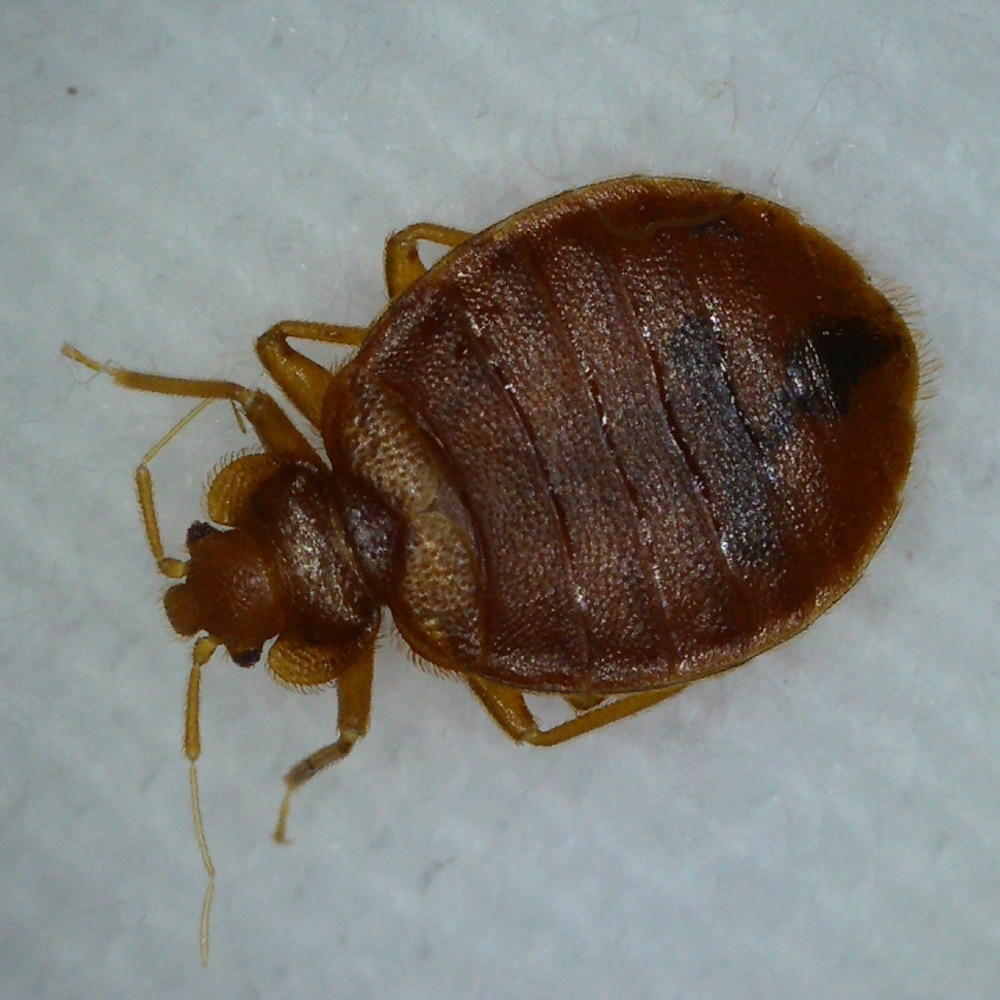
Bed bugs are small, oval-shaped insects that measure about 5–7mm in length. They are reddish-brown in colour and cannot fly or jump, but they are excellent crawlers and hitchhikers. They often enter homes through luggage, second-hand furniture, or clothing.
Quick Facts:
- They feed on blood, usually at night.
- They can survive up to one year without a meal.
- They hide in mattress seams, bed frames, carpets, and walls.
The Bed Bug Life Cycle: Understanding the Enemy
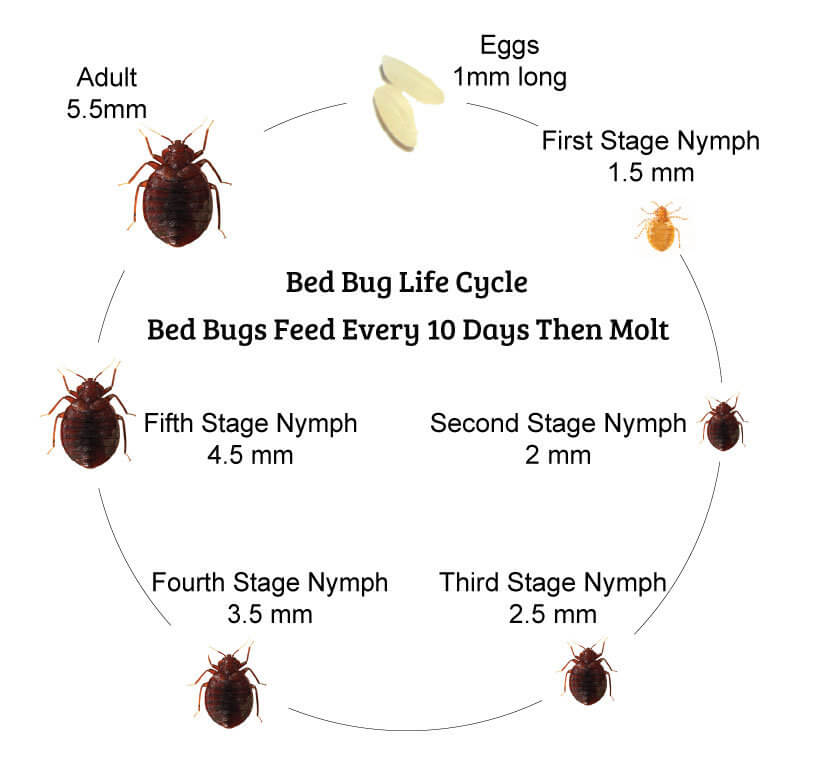
To effectively eliminate bed bugs, it’s important to understand their life cycle:
- Eggs: Tiny, white, and oval-shaped, bed bug eggs are about the size of a pinhead. They hatch in 6–10 days, and a single female can lay up to 500 eggs in her lifetime.
- Nymphs: These are smaller, lighter-coloured versions of adults. Nymphs must feed on blood to grow, moulting five times before reaching adulthood.
- Adults: Adults are about the size of an apple seed and can live for over 18 months. They reproduce quickly, making infestations difficult to control.
Signs of a Bed Bug Infestation
If you suspect bed bugs are in your home, look for these common signs:
- Bites: Red, itchy bites in clusters, straight lines, or zigzag patterns, often on exposed skin like arms, legs, and neck.
- Blood Stains: Tiny blood spots on sheets or mattresses.
- Faecal Spots: Black or brown spots (bed bug droppings) on mattresses, sheets, or furniture.
- Exoskeletons: Shed skins left behind as they grow.
- Live Bugs: They are most active at night but can sometimes be spotted during the day.
- Musty Odour: A strong, sweet smell may indicate a severe infestation.
Bed Bug Bites: Symptoms and Treatment
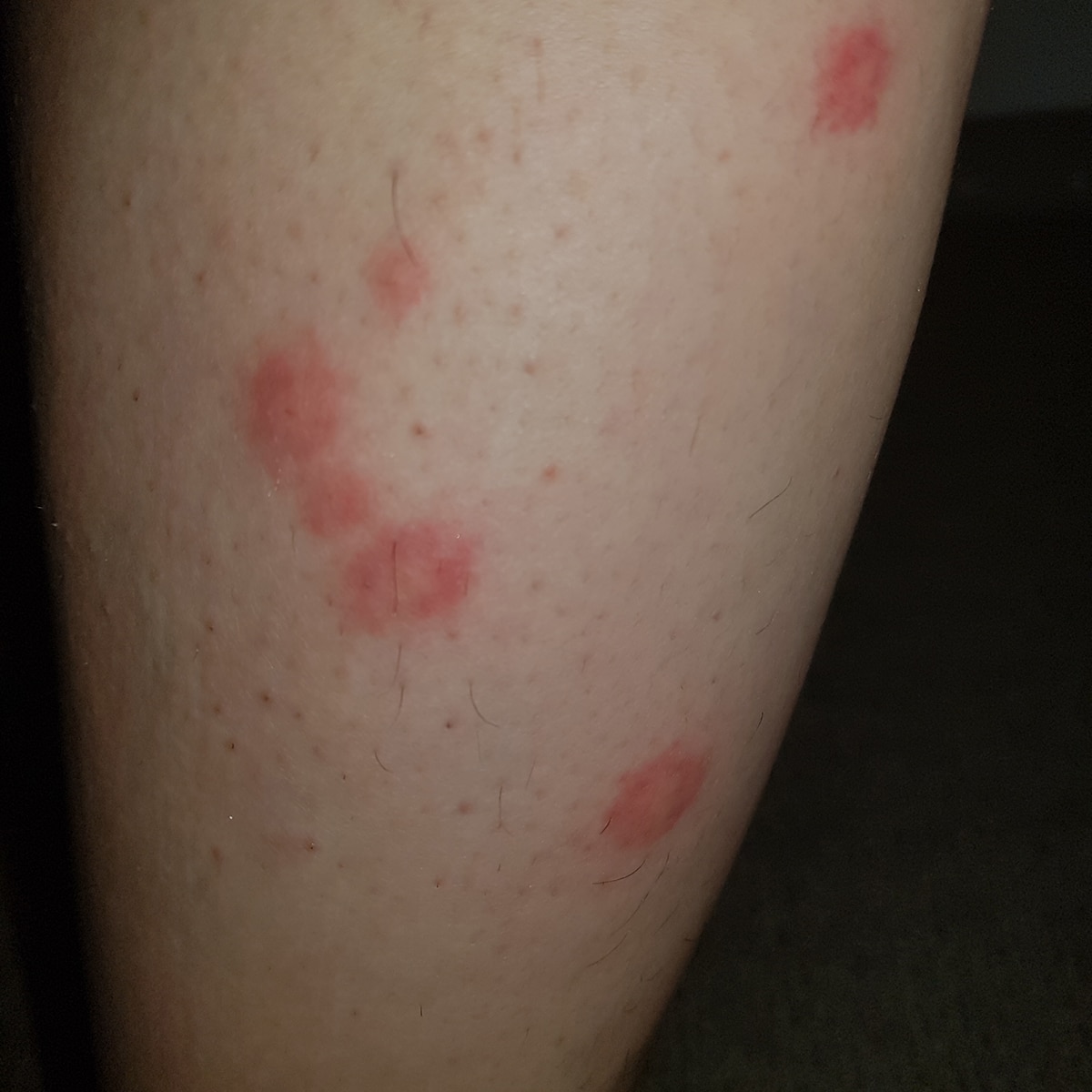
Bed bug bites are typically red, itchy, and appear in lines or clusters. They are most common on exposed skin, such as arms, shoulders, and legs. While some people do not react to bites, others may experience allergic reactions, including swelling, redness, or severe itching.
How to Treat Bed Bug Bites:
- Self-Care: Wash bites with antiseptic soap and apply an ice pack to reduce swelling.
- Over-the-Counter Treatments: Use anti-itch creams like calamine lotion or hydrocortisone cream.
- Medical Treatment: If bites are severe or infected, consult a doctor. They may prescribe steroid creams, antihistamines, or antibiotics.
How to Get Rid of Bed Bugs
If you’ve discovered bed bugs in your home, the first thing to know is you can get rid of them. But it works best when you follow a clear system. Eliminating these pests can be challenging, but a combination of chemical and non-chemical treatments can help.
Why Pest Controllers Aren’t the Best Solution:
- Expensive: Professional pest control services can cost thousands of dollars.
- Chemicals: Many pest controllers rely on chemical treatments, which may not suit every household, especially where children, pets, or sensitive individuals are present.
- No Guarantees: Many pest control treatments require multiple visits and still don’t guarantee complete eradication.
A Better Solution: Our DIY Eco-Friendly Treatment
Our DIY Isolation System is a safe, effective, and affordable alternative to traditional pest control. Here’s why it’s the best choice:
- Cheaper: At a fraction of the cost of a pest controller, our system saves you money.
- Easier: No need for multiple treatments or complicated preparations. Our system is simple to use and provides instant protection.
- Safer: Our eco-friendly solution uses no toxic chemicals, making it safe for your family and pets.
- Guaranteed: Unlike pest controllers, our system comes with a guarantee to eliminate these pests and prevent future infestations.
How Our Isolation Method Works
Our Isolation Method is designed to give you instant relief from bed bugs while also providing long-term protection. The goal is simple: stop bed bugs from reaching you at night, kill the ones already in the room, and prevent new ones from getting established.
One of the biggest advantages of this method is that you only need to wash and prepare your bed, not your entire room or house, which makes the process far easier and less stressful.
- Steam Treatment: Use a handheld steamer to kill bed bugs and their eggs instantly on contact. Steam is ideal for seams, mattress edges, bed frames, cracks, and any area where bed bugs like to hide. This gives you an immediate knock-down so you can start sleeping easier right away.
- Diatomaceous Earth (DE): Apply this natural powder lightly to the bed frame, slats, and other hiding spots. As bed bugs crawl across DE, it sticks to their outer shell and dehydrates them, killing them over time. This creates a long-lasting protective barrier without using harsh chemicals.
- Mattress Covers: Use a quality mattress encasement to completely seal the mattress. Any bed bugs already inside the mattress become trapped and eventually die, while new bugs can no longer hide inside. It also makes inspections much easier.
- Barrier Traps: Place barrier traps under the bed legs to isolate your bed from the rest of the room. This means the only way bed bugs can reach you is by crossing the trap, where they are captured and killed. This gives you instant protection from any bed bugs still in the room.
Because your bed is isolated, you don’t need to empty wardrobes, bag up belongings, or wash everything you own. You simply wash and prepare the bed itself, set up the system, and you are protected while the remaining bed bugs are eliminated over time.
By combining instant steam kill with long-term DE protection, mattress encasements, and physical barriers, you break the bed bug life cycle and stop the infestation spreading further — without turning your whole house upside down.
Watch Our DIY Bed Bug Treatment Video Instructions for Bed Frames and Ensemble Beds
How to Prevent Bed Bugs
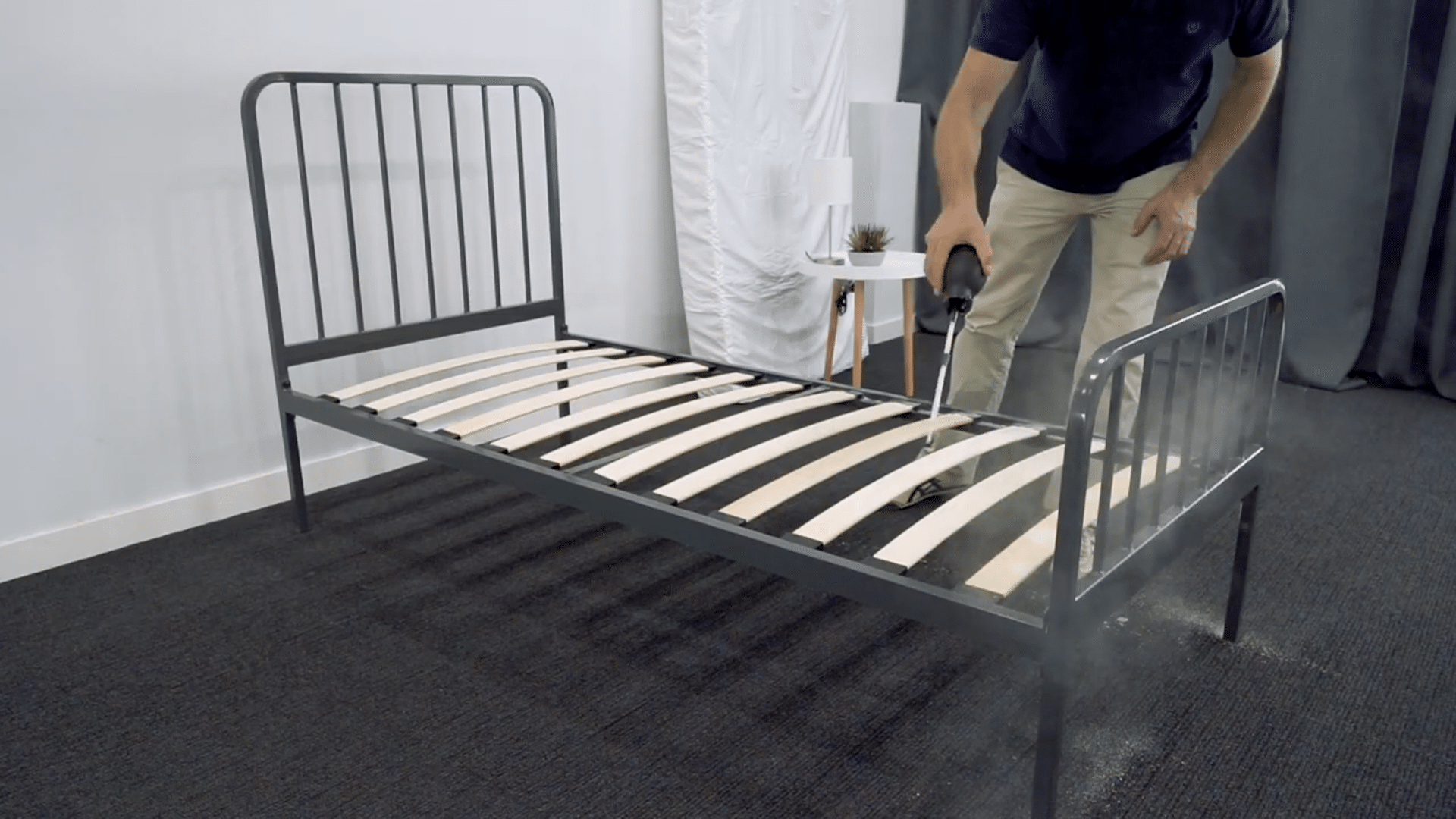
Diatomaceous Earth (DE) creates a long-lasting barrier that kills bed bugs naturally
Preventing bed bugs is easier than dealing with an infestation. Follow these tips to keep your home bed bug-free:
- Inspect Second-Hand Furniture: Carefully check used furniture for signs before bringing it home.
- Travel Smart: Inspect hotel rooms and keep luggage off the floor. Wash clothes in hot water after travelling.
- Regular Cleaning: Vacuum frequently, especially around beds and furniture.
- Dust Your Bed Frame with Diatomaceous Earth (DE): Lightly apply DE to bed frames, slats, seams, and cracks where bed bugs like to hide. As they crawl through it, the powder dehydrates and kills them, giving you long-term protection without harsh chemicals.
- Use Barrier Traps: Place traps under bed legs to catch them before they reach you.
Tip: Always use approved Diatomaceous Earth (DE) products and avoid breathing in the dust while applying.
Read More About How To Prevent Bed Bugs
Final Thoughts: Take Control of Your Bed Bug Problem
Bed bugs are persistent, but with the right knowledge and tools, you can eliminate them and prevent future infestations. While pest controllers are expensive, use toxic chemicals, and often require multiple treatments with no guarantees, our DIY Isolation System offers a safer, easier, and more affordable solution.
Our eco-friendly treatment provides instant protection and comes with a guarantee to keep your home bed bug-free. Why spend hundreds on pest controllers when you can solve the problem yourself for a fraction of the cost?
Ready to Say Goodbye to Bed Bugs?
Shop our DIY Isolation System today and finally get your sleep back… without harsh chemicals, repeat call-outs, or thousands in pest control fees.
Frequently Asked Questions
- Are bed bugs harmful to humans?
Bed bugs don’t spread disease, but their bites can still cause itching, redness, swelling, allergic reactions, and a lot of stress and lost sleep. Some people barely react, while others may experience strong skin reactions. If swelling or rash becomes severe, always seek medical advice. - How do I know if I have bed bugs?
The most reliable signs are small blood spots on sheets, dark faecal stains, shed skins, bed bug eggs, or seeing live bugs in mattress seams, the bed frame, or nearby furniture. Bites alone are not always proof, because other insects and skin conditions can look similar. A close inspection of the bed area is essential. - What do bed bug bites look like?
Bed bug bites are usually small, red, itchy welts that may appear in lines or clusters. They often show up on exposed skin such as arms, shoulders, legs, and neck. Reactions vary widely, so some people may not notice any marks at all. - How can I prevent bed bugs?
Inspect second-hand furniture before bringing it inside, use protective mattress covers, regularly vacuum around the bed, and set up bed leg traps. Keep the bed away from walls and don’t let bedding touch the floor to reduce hiding and climbing points. - Where do bed bugs hide during the day?
Bed bugs like tight cracks and dark spaces close to where you sleep. Common hiding places include mattress seams, bed frames, slats, headboards, skirting boards, behind photos, under carpet edges, and inside furniture joints.
Watch Our DIY Videos: Control Bed Bugs With The Isolation Method
Are you looking for an organic DIY treatment? These step-by-step videos show you exactly how to use the Isolation Method on different types of beds.
For an Ensemble Bed
For a Bed with Slats
If you have enjoyed this blog, you might also like to check out our blog, What Are Bed Bugs?
Sources:
Department of Health WA |
Oxford Academic |
National Library of Medicine

Tony pioneered a non-toxic, eco-friendly solution for bedbug infestations. His innovation won the ABC TV show “The New Inventors” in 2009. In 2012, he successfully registered Diatomaceous Earth for bedbug control in Australia.





Garry says
How long does it take after the treatment for the bugs to be completely gone.
Will they go into my dogs bed in the bedroom. If so, how do I treat that
Tony Abrahams says
Hi Garry
The good news is our Isolation Method gives instant relief from bites once the bed is set up properly.
The reason is because bed bugs need to crawl to you for a blood meal. By isolating the bed with the barriers under the legs, moving the bed away from walls, and keeping bedding off the floor, the bugs in the room can no longer reach you. At the same time, they are forced to walk through the powder in the barriers and on the treated bed frame, which kills them over time.
Steam gives you the instant kill on contact, while the powder provides the long-term protection.
Most people sleep bite-free very quickly once the system is installed correctly, even before every single bug in the room is dead.
As for your dog’s bed, yes, bed bugs can sometimes hide there if the dog sleeps in the bedroom. The easiest option is usually to steam the dog bed thoroughly and lightly apply powder around the surrounding floor area and nearby skirting boards. If possible, keep the dog bed away from your bed during treatment.
Feel free to send photos of your setup if you want advice on the best way to isolate the room properly.
Regards
Tony
Phillip Bohringer says
Is your DE the amorphous type or crystalline?
Tony Abrahams says
Hi Phillip
Our DE is amorphous silica, not crystalline.
That’s the non-toxic type used for insect control and safe for use around the home when applied as directed.
Tony
Richard says
Looking well projects a strong first impression.
charlotte says
If my mattress is mildly infested with bedbugs, and I have put my clothes on it to fold and organize would they have gone in my clothes and in my wardrobe walls?
Tony Abrahams says
Hi Charlotte,
Even if one did get carried over in your clothes, it won’t set up a colony in the wardrobe. Bed bugs need to live on or very close to a sleeping person so they can feed regularly, which is why they stay around the bed and nearby furniture.
So at worst you get a hitchhiker, not a new infestation living in the cupboard walls.
They will go back to yur bed at night and stay on the bed.
Regards BBB Team
Gail says
Hi, I think I may have bed bugs, getting bitten by something. Had not seen anything until today, a few white and black spots on sheet. So maybe spotted it early hopefully. Interested in buying some of your product if it’s not too expensive. So could you please contact me with details..Thank you..😃
Tony Abrahams says
Hi Gail
Sorry to hear you’re getting bitten, I know how stressful that can be.
The good news is if you’ve only just started noticing spots on the sheets, you may have caught it early. The white/black spots can be a clue, but it’s worth confirming first because a few other things can look similar.
If you can, please reply with:
A clear photo of the spots on the sheet
Any bites (if you have them)
Your mattress seams and the bedhead/bed frame (close up)
If it is bed bugs, our DIY system is affordable and you can treat it yourself without paying for a pest controller. Most people start with our Bed Bug Killer Powder and then add the bed isolation barriers and a mattress cover for long-term protection.
If you tell me what size bed you have (single/double/queen/king) and whether it’s a base with legs, I’ll recommend the cheapest setup that will work.
Regards, Sean
Bed Bug Barrier
Julie White says
Brilliant video and great advice on using your products.
Tony Abrahams says
Hi Julie. Thank you for your brilliant feedbavck. Regards Tony
Martin weston says
I recently bought basically everything you sell to rid oneself of bed Bugs with a ensemble bed.
I’ve fitted the base /mattress/pillow covers, and the traps under the legs 6 days ago [I also powdered around the carpet floor/wall joining area, and haven’t had a bug problem since], so I know your products work.
Question: I have a small room, and have moved the bed so it is in free space, as you recommend.
My problem is I need the space back in the room again, which would be putting the bed up against the walls again.
When do you think I can safely do that?
Tony Abrahams says
Hi Martin
Great to hear the system’s working for you!
We usually recommend keeping the bed isolated for at least 4 weeks. That’s because bed bug eggs can take up to 2 weeks to hatch, and in cooler weather, it can take even longer. By giving it a full month, you’re ensuring that any unhatched eggs in the room have had time to hatch—and the newly hatched bugs are forced to crawl toward the bed, where they’ll be killed by the traps and powder.
Once that 4-week window has passed with no signs of activity, it’s generally safe to move the bed back (just keep the traps and covers in place).
You’re nearly there—keep going!
Regards BBB
Rafael says
Can bed bugs live inside your body or under your skin like parasites?
Tony Abrahams says
Nope, thankfully they can’t! Bed bugs are creepy, but they’re not that creepy. Unlike lice or scabies mites that live on or under your skin, bed bugs are external parasites—they only feed on your blood, and only while you’re asleep. They don’t burrow under your skin or live inside your body. After feeding, they scurry back into tiny hiding spots like mattress seams, cracks in the bed frame, or behind skirting boards. So while their bites can be irritating and itchy, you won’t have to worry about them nesting in your skin. Still, their stealthy nature and nighttime feeding habits are enough to give anyone the shivers!
Cynthia says
Where can I get thw powder in chicago and a picture of it would help
Tony Abrahams says
Hi Cynthia.
We are an Australian company so we dont sell this powder in the USA. You can find Diatomaceous Earth on Amazon in the USA.
Regards Tony
David Canty says
I would like to buy these products. Can I pick them up in St Kilda? David
Tony Abrahams says
Hey David,
Thanks for your interest in our products! Unfortunately, we don’t offer a pick-up option. All orders are processed online and dispatched via Australia Post. If you place your order before 12 noon, Monday to Friday, it will be shipped out the same day, and you’ll receive a tracking number for your convenience.
Let us know if you have any other questions—we’re here to help! Regards BBB
Adam T says
Is the powder safe for my pets?
What is it made from?
Tony Abrahams says
Hi Adam. Yes, the powder is safe for pets. It’s made from Diatomaceous Earth (DE), a natural substance composed of fossilized remains of tiny aquatic organisms called diatoms. The DE powder we use is food-grade, meaning it’s safe for both humans and animals when used correctly. It works by absorbing the protective oils on insects’ exoskeletons, dehydrating and killing them. Regards BBB
Kristine says
Can you get bedbugs from going to the movies?
Tony Abrahams says
Yes, it’s possible to bring bedbugs home from a movie theater, though it’s rare. Bedbugs can hide in the fabric of theater seats, and they can hitchhike on people’s clothing, bags, or jackets. If someone brings bedbugs into the theater, they could transfer to another person’s belongings.
To reduce your risk, quickly inspect your seat before sitting. Look for any small, dark spots or tiny reddish-brown bugs. Keep your belongings off the floor, and check your clothes and bags when you get home if you’re concerned.
While it’s unlikely, staying cautious in high-traffic places can help you avoid bedbugs.
Vanessa Borg says
Why do supermarkets sell bedbug sprays that are ineffective?
Tony Abrahams says
Hi Vanessa. Supermarkets often sell bedbug sprays that are ineffective because they tend to prioritize stocking products that are widely available, affordable, and have mass appeal. Many of these sprays contain chemicals that may kill bedbugs on contact but don’t provide long-term solutions or penetrate deep enough to eliminate entire infestations. Also, bedbugs have developed resistance to some common pesticides, making these over-the-counter sprays less effective. Since supermarkets aren’t specialized in pest control, they may not carry the more advanced or eco-friendly options that are proven to work better.
Freya says
Is the powder safe for my pet cat, because she is trying to lick it? Thanks
Tony Abrahams says
Hi Freya,
Yes, the powder is safe for pets. It’s a food-grade, non-toxic powder, so it won’t cause any issues if your cat eats it. In fact, farmers feed this powder to their livestock to prevent intestinal parasites.
Regards,
Tony