


In the article
Last Updated on 04/03/2026 by Tony Abrahams
Dust mites are one of those problems that feels vague until it hits you personally. You wake up itchy. Your nose blocks up. Your eyes sting. You blame “dust”… then you clean… then you clean again… and nothing really changes.
Here’s the uncomfortable truth: if dust mites were visible, most people would never climb into bed again. Not because you’re dirty. Not because your house is messy. But because dust mites live exactly where humans live best. Warm bedding. Soft fabric. Eight hours of stillness every night.
The good news is you don’t need to panic or turn your whole home upside down. Dust mite control is mostly about understanding where the real problem is, then putting the right barrier in the right place.
TL;DR
- Dust mites are real, microscopic creatures that live mainly in mattresses, pillows and quilts.
- You can’t “see the problem”, which is why people underestimate it.
- Dust mites feed on shed human skin, so even very clean homes can have them.
- Most dust mite symptoms feel worse at night because you’re exposed for hours, close to bedding.
- Cleaning helps, but it doesn’t solve mites living deep inside mattresses and pillows.
- The simplest long-term strategy is to block allergens using dust mite covers and protectors.
What Dust Mites Actually Look Like (If You Could See Them)
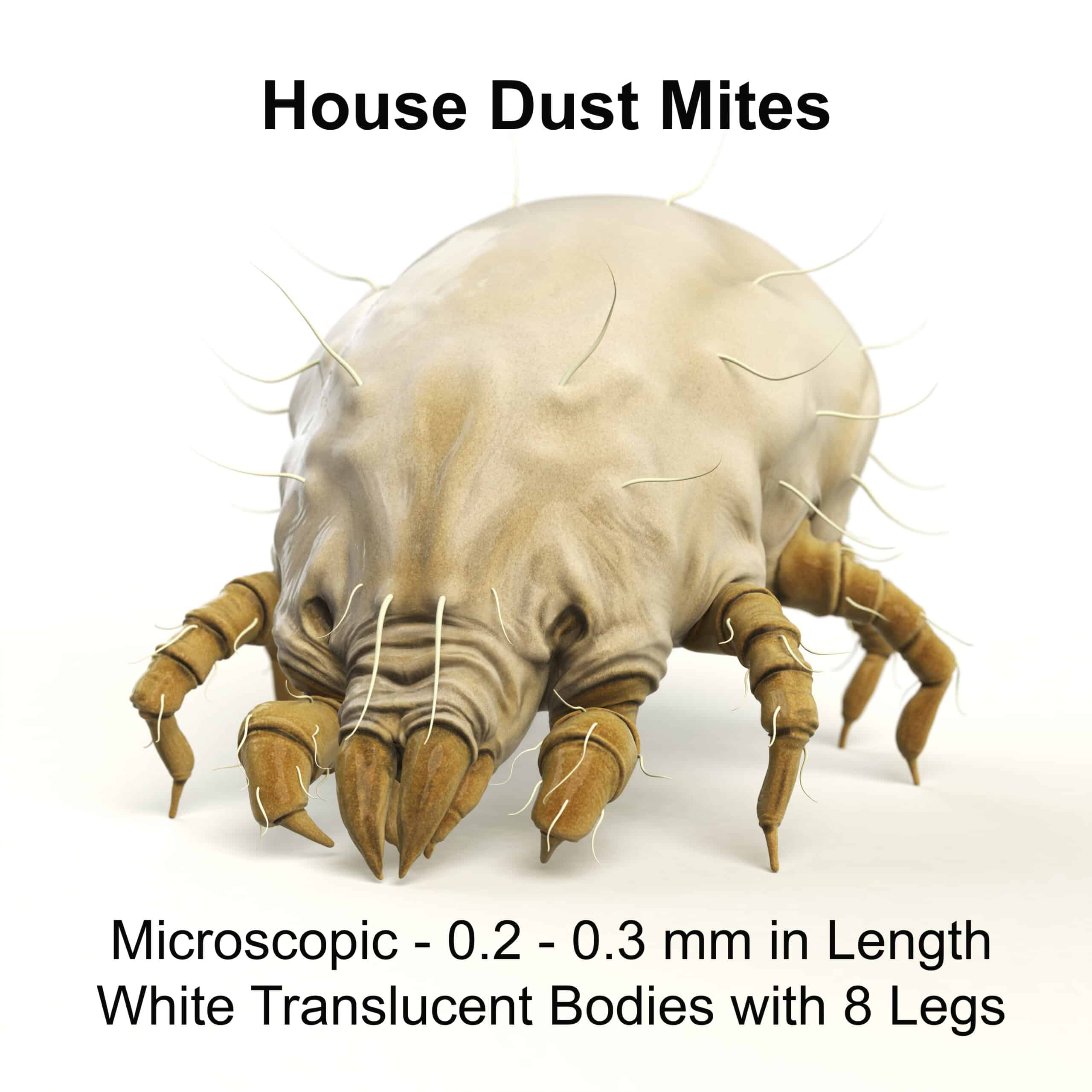
Image of a dust mite
If house dust mites were big enough to spot, they’d be the stuff of nightmares. They’re pale, translucent, and shaped like tiny little eight-legged blobs. No wings. No jumping. No dramatic attack behaviour.
They’re not out to “bite” you. What causes problems is the allergen load they leave behind, especially in bedding where you breathe it in night after night.
Most people go looking for a visible culprit and come up empty. That’s the trap. Dust mites don’t need to be obvious to cause symptoms.
Why Your Bed Would Terrify You If Dust Mites Were Visible
It’s not your kitchen bench. It’s not your carpet. It’s not the top of your bookshelf.
Your bed is the perfect dust mite habitat because it has everything they want:
- Warmth (body heat, trapped in bedding)
- Humidity (breathing, sweat, the microclimate under doonas)
- Food (shed skin cells, every single day)
- Protection (they live deep in the fibres of mattresses and pillows)
So if you’re reacting most in the bedroom, or you feel worse overnight or in the morning, that’s not random. That’s exposure.
If you want the simplest “start here” approach, your best move is usually to begin with the big four:
- Dust Mite Mattress Covers
- Dust Mite Pillow Protectors (choose the option that matches your pillow type)
- Dust Mite Quilt / Doona Covers
- Dust Mite Steamer
Those three don’t “clean the house”. They change your exposure every night. That’s the point.
Dust Isn’t the Problem. You Are (And That’s Normal)

Dust mite allergies can cause sneezing and coughing.
This is the part people resist, because it sounds insulting, but it’s actually relieving.
Dust mites feed on shed human skin. Humans shed skin constantly. Which means you can be the cleanest person and still have dust mite and allergies. They aren’t attracted to “filth”. They’re attracted to humans living normal human lives.
That’s why dust mites show up in hotels, spotless homes, brand-new mattresses, and beautifully styled bedrooms. They don’t care what your house looks like. They care what your bed provides.
Why Dust Mite Allergies Often Feel Worse at Night
A lot of people say: “I feel fine during the day, then the second I lie down I start reacting.”
That pattern makes sense when you think about exposure.
- You spend hours with your face close to pillows and bedding.
- You breathe in the same air pocket around your head for a long time.
- Movement in bed can stir allergens within the fabric and fibres.
- Long exposure matters more than a quick pass through a dusty room.
So if your dust mite symptoms are mainly nighttime or morning, it’s often a sign to focus less on “whole house cleaning” and more on the bed itself.
Why Cleaning Alone Can’t Fix a Microscopic Problem

Washing your bedding will help but it will not get rid of your allergies completely
Cleaning helps. It’s not pointless. But cleaning alone is often the reason people feel like they’re losing their minds, because they keep doing more and more for a result that doesn’t match the effort.
Here’s why:
- Vacuuming removes surface dust, but dust mites live deep inside mattresses, pillows and thick fabric.
- Wiping surfaces doesn’t reach the main habitat in the bed.
- Washing sheets helps reduce allergens on the surface, but it doesn’t stop mites living inside the mattress and pillow core.
- Sprays are often a short-term band-aid and may not be suitable for bedding (and many people simply don’t want chemicals where they sleep).
That’s why so many people clean “harder” and still wake up sniffly. They’re treating the edges of the problem.
Why Steam Is One of the Few Things That Actually Works on Dust Mites
Cleaning has limits, but steam is different. Proper steam treatment works because it attacks dust mites at a biological level, not just on the surface.
High-temperature steam penetrates deep into fabric, seams, cushions, and mattress surfaces where dust mites actually live. At the right temperature, steam kills dust mites on contact and helps break down the allergen proteins they leave behind.
This matters because dust mite allergies are not caused by the mites themselves, but by the allergens trapped in bedding, couches, dog beds, and soft furnishings. Steam neutralises those allergens without adding chemicals to the places you sleep or relax.
Unlike sprays or powders, steam:
- Reaches deep into fabric and foam where mites hide
- Kills dust mites instantly through heat
- Reduces allergen build-up without residues
- Is safe for mattresses, couches, pet beds, and cushions when used correctly
Steam works best as part of a system. Use steam to reduce mites and allergens in mattresses, couches, dog beds, and soft furnishings, then seal mattresses and pillows with proper covers to stop allergens from escaping again.
If you’re dealing with allergies linked to bedding or soft furniture, a dust mite steamer gives you a way to treat the source directly, not just the symptoms.
You Don’t Need to Kill What You Can’t See. You Need to Block It
This is where dust mite control becomes simple and realistic.
Instead of trying to eliminate every dust mite in the universe (good luck), the smarter strategy is to reduce exposure by using physical barriers. A proper dust mite cover turns your mattress, pillows and quilt into sealed, protected zones that allergens can’t easily escape from.
If you’re looking for a straightforward starting point, these are the internal links people most often need:
- Dust Mite Mattress Covers (the biggest hotspot)
- Dust Mite Pillow Protectors (closest to your airway)
- Dust Mite Quilt / Doona Covers (often forgotten, but important)
Once the bed is protected, everything else you do works better. Washing sheets, vacuuming, decluttering, airing the room out. All useful. But the bed barrier is the thing that changes your day-to-day experience the fastest.
Quick, Practical Dust Mite Checklist (No Overthinking)
- Start with the bed: cover the mattress, pillows, and quilt/doona.
- Wash bedding regularly (hot wash when appropriate for the fabric).
- Reduce “fluffy collectors” around the bed (excess cushions, plush toys, thick throws).
- Vacuum floors and skirting boards to reduce dust and allergen build-up.
- If you have pets that sleep on the bed, consider protecting pet bedding too (they add warmth and skin flakes as well).
FAQs: If Dust Mites Were Visible
Can dust mites bite you?
No. Dust mites don’t bite humans. The main issue is the allergens they leave behind, which can trigger sneezing, congestion, itchy eyes, eczema flare-ups and asthma symptoms in sensitive people.
Does vacuuming get rid of dust mites?
Vacuuming reduces surface dust and allergens, which can help, but it doesn’t solve dust mites living deep inside mattresses, pillows and quilts. Think of it as supportive, not the main solution.
Do dust mites live in a new mattress?
They can build up quickly once you start sleeping on it. Dust mites don’t appear because the mattress is “old”. They appear because it becomes a warm, humid food source over time.
What’s the fastest way to reduce dust mite allergy symptoms at night?
For most people, the fastest improvement comes from reducing exposure in bed by using dust mite covers on the mattress and pillows, then keeping bedding clean. It’s the simplest high-impact change.
Final Thought: If Dust Mites Were Visible
If dust mites were visible, nobody would sleep tonight. But they’re not visible, and that’s weirdly lucky. Because it means you can deal with them calmly, without panic, and without turning your whole home into a science experiment.
Start where the mites live most. Protect the bed with proper barriers. Then build from there.
When you’re ready, browse our Dust Mite Products range and start with the covers that match your bedding.
How to Protect Your Couch and Dog Bed From Dust Mite Allergies
If you enjoyed our blog, If Dust Mites Were Visible, No One Would Sleep Tonight, you might also like to read about Smells Dust Mites Hate.
Sources: If Dust Mites Were Visible, No One Would Sleep Tonight
Asthma + Lung UK – House Dust Mite Allergy

Tony pioneered a non-toxic, eco-friendly solution for bedbug infestations. His innovation won the ABC TV show “The New Inventors” in 2009. In 2012, he successfully registered Diatomaceous Earth for bedbug control in Australia.





Leave a Reply