


In the article
Last Updated on 06/08/2025 by Tony Abrahams
Ever feel like something’s biting you, but you can’t see a thing? And there’s no sign of fleas, mosquitoes, or bed bugs? You might be dealing with bird mites, tiny parasites that come from, you guessed it, birds.
Let’s break it down.
What Exactly Are Bird Mites?
Bird mites are microscopic arachnids—think spiders, but much smaller—that naturally live on wild birds and in their nests. Normally, they mind their own business feeding on birds’ blood. But when a bird leaves the nest (or dies), these mites go looking for a new host. That’s when they can end up in your home.
They don’t want to be on humans, but in their desperate hunt for a meal, they’ll bite. And it’s not pleasant.
Tiny but Visible: Size and Appearance
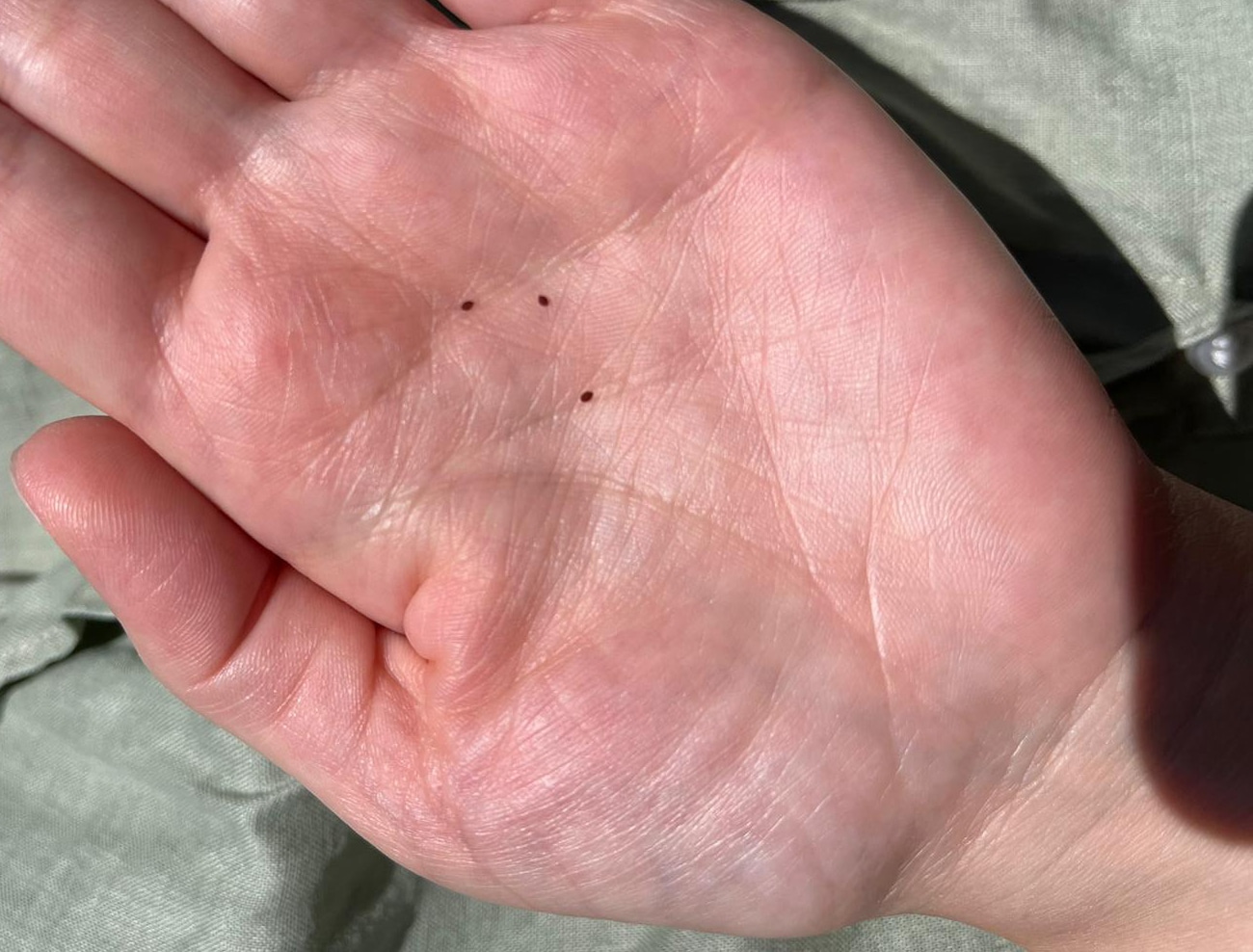
3 bird mites on palm of hand
Even though they’re tiny, around (0.8 mm) 1/32 inch, bird mites can be seen with the naked eye if you look closely. They’re often white or gray, but once they’ve fed on blood, they turn reddish or darker.
They have eight legs, move quickly, and are sometimes mistaken for specks of dirt until they start crawling.
Life on Birds
Their whole lifecycle revolves around birds. They feed, breed, and die in bird nests, typically those of pigeons, sparrows, and starlings. But when the nest is abandoned, the mites scatter, often straight into nearby buildings through roof cavities, ceiling vents, or cracks around windows.
Signs of a Bird Mite Infestation
So, how do you know they’ve made their way into your home? Here are the biggest red flags.
Itchy Bites or Skin Irritation
Waking up with mysterious red bites, itching, or a crawling sensation on your skin? These are often the first signs. Bird mite bites can easily be mistaken for mosquito or flea bites, and unlike bed bugs, they may bite day or night.
They typically go for arms, neck, or exposed skin.
Tiny Specks Around Windows or Walls
You might spot tiny moving dots around windowsills, ceilings, bed frames, or walls, especially in rooms near attics or roof cavities. These are the mites themselves, wandering around looking for a host.
Look for them crawling in clusters near the light or warmth.
Bird Nest Clues
If there’s a nest in your eaves, chimney, or roof, you’ve likely found the source. Feathers, droppings, or bird noise above your ceiling? That’s your signal. Once the birds are gone, the mites come down into the home below.
Who Can Be Affected by Bird Mites?

Bird mites perfer to live on birds
These mites aren’t picky once they’ve lost their bird. Here’s who’s most at risk.
Humans as Accidental Hosts
Here’s the good news: bird mites can’t survive on human blood. They’ll bite us, yes, but they won’t live or breed on us. That said, those bites can still cause intense discomfort, sleepless nights, and skin irritation.
Pets and Indoor Birds
Your cats or dogs may show signs of scratching or skin inflammation if mites are crawling around. Indoor birds like parrots or budgies are even more vulnerable and could suffer feather damage or skin issues if mites find them.
High-Risk Situations
You’re more likely to run into bird mites if you:
- Work with birds (farmers, poultry workers, pet store staff)
- Live in a home with pigeons nesting in the roof
- Have a property near trees with nesting birds
Anyone in these scenarios should be extra cautious and inspect for nests around the home regularly.
Coming next: We’ll explore exactly how to get rid of bird mites, step-by-step.
But for now, check your roofline, listen for birds overhead, and if you’re feeling itchy… maybe don’t rule out mites just yet.
Bird Mite Products
Protect Every Part of Your Home from Bird Mites
Bird mites don’t just stay in the roof. They crawl into your bedding, your cushions, even your pet’s bed.
That’s why we’ve designed our dust mite-proof and waterproof covers to do more than just protect your mattress.
They also fit:
- Duvets & pillows
- Couch cushions & seats
- Dog beds
- And more
These covers lock mites out—and keep your peace of mind in.
Need to kill them instantly?
Use our powerful handheld steamer to kill bird mites on contact—no chemicals, no mess. It’s safe to use on bedding, couches, carpets, and even pet areas.
Mites in the roof or walls?
That’s where our Bed Bug Killer Powder (DE) comes in. It’s 100% natural and can be applied safely in roof cavities, wall cracks, or nests—anywhere mites might hide.
Frequently Asked Questions About Bird Mites

Bird Mites 101 – These Tiny Mites Prefer Birds Like Sparrows
- Can bird mites live in my hair or scalp?
Not really, but it can feel like they do. Bird mites don’t live on humans and aren’t designed to cling to hair shafts like lice. But they can crawl on the scalp looking for skin to bite, which can create a tingling or crawling sensation. If you’ve been near a nest, wash your hair thoroughly and check pillowcases. - Can bird mites survive in laundry or clothes?
Yes, for a short while. Mites can hide in clothing, especially in items left near infested areas (like attics or window sills). They can survive a couple of days without a host. A hot wash and dryer cycle will kill them, so don’t just fold and put things away, heat is your friend. - Do bird mites glow under UV or blacklight?
Nope, unfortunately, they don’t fluoresce like some bodily fluids or pests. That means you can’t use a blacklight to spot them. You’ll need to rely on close visual inspection and movement, try placing a piece of white paper near where you suspect activity and watch for crawling specks. - Do bird mites come out more at night?
Yes and no. Unlike bed bugs, bird mites don’t strictly follow a nocturnal schedule, but they do tend to become more active in warm, dark, and still environments, like a bedroom at night. If you notice itching or crawling feelings in bed, it’s worth investigating further. - Can I get bird mites from my neighbour’s roof?
Absolutely. If your neighbour has a pigeon problem, and their nest is tucked into the shared eaves or a nearby tree overhang, the mites can migrate across roof cavities, vents, or even through open windows. They don’t respect property lines. If you’re in a townhouse or share walls, mention it to your neighbour, you may need to treat the area together.
DIY Video: How to Use Mite Covers to Protect Couches, Cushions, and Pet Beds
Sources
The University of Minnesota, https://extension.umn.edu
Suburban Extermination, https://www.suburbanexterminating.com

Tony pioneered a non-toxic, eco-friendly solution for bedbug infestations. His innovation won the ABC TV show “The New Inventors” in 2009. In 2012, he successfully registered Diatomaceous Earth for bedbug control in Australia.





Leave a Reply