


In the article
Last Updated on 12/01/2026 by Tony Abrahams
TL;DR: How Did I Get Bed Bugs?
- You didn’t get bed bugs because your home is dirty. Clean homes get bed bugs too.
- Most infestations start when bed bugs hitchhike in on luggage, clothing, furniture, visitors, or from neighbouring apartments.
- Bed bugs are attracted to body heat and carbon dioxide, not mess or food.
- You can have bed bugs even if you haven’t travelled recently or brought in second-hand items.
- You don’t need to treat the whole house. Isolating the bed stops bites immediately and forces all bed bugs in the room to die over time.
How Did I Get Bed Bugs?
Bed bugs are often brought home accidentally on clothing or luggage after travel.
Most people get bed bugs without realising it. They hitchhike into homes on luggage, clothing, furniture, or visitors, and once inside, they head straight for the bed.
- Travel: Bed bugs hitch rides on luggage, clothes, and personal items. Hotels and hostels are their favorite jumping-off points.
- Second-Hand Furniture: Used mattresses, bed frames, or couches can be bed bug magnets.
- Public Areas and Public Transport: Movies, buses, trains, and taxis can carry bed bugs on seats and fabrics.
- Neighbouring Infestations: In apartments or condos, bed bugs can crawl through walls, floors, and ceilings.
- Visitors: Friends or family can unknowingly bring bed bugs into your home.
Bed Bug Facts: Signs, Causes & How to Get Rid of Them Fast & Forever in 2026
Why Bed Bugs Invade Homes and Bedrooms
Bed bugs don’t invade homes because something is wrong with the house or the people living in it. They invade because homes, and especially bedrooms, provide exactly what they need to survive. A warm, stationary human sleeping in the same place every night is the perfect food source, and beds offer countless hiding spots close to that source.
Once bed bugs make their way inside, usually by hitchhiking on luggage, clothing, furniture, or visitors, they naturally gravitate toward bedrooms. Beds give them darkness during the day, tight cracks to hide in, and easy access to carbon dioxide and body heat at night, which is how they locate a host.
Bedrooms also tend to remain undisturbed for long periods. Unlike living areas that are cleaned, rearranged, or used throughout the day, beds and bed frames stay still. This stability allows bed bugs to settle in, reproduce, and feed regularly without being noticed.
In short, bed bugs invade homes by accident, but they stay because bedrooms offer the safest, most efficient environment for them to survive and multiply.
What Draws Bed Bugs to Bedrooms Once They Are Inside
Bed bugs do not get attracted to homes from the outside. They arrive accidentally, usually by hitchhiking on luggage, clothing, furniture, or by being forced to move when neighbouring properties use sprays or chemical treatments. Once inside, however, bed bugs quickly migrate to the one place that gives them everything they need to survive: the bedroom.
- Body Heat: Bed bugs are not drawn to houses, but once indoors they follow body heat to locate a sleeping person.
- Carbon Dioxide: The CO₂ you exhale at night acts as a short-range signal that helps bed bugs find a host once they are already nearby.
- Proximity to a Host: Bed bugs prefer to hide as close as possible to where you sleep so they can feed without travelling far.
- Undisturbed Hiding Spots: Bed frames, mattress seams, slats, and bed bases provide tight, dark spaces where bed bugs can hide during the day.
- Chemical Displacement: When neighbouring units use sprays or foggers, bed bugs are often driven through walls, floors, and ceilings into nearby bedrooms.
Signs of a Bed Bug Infestation and Why Early Detection Matters
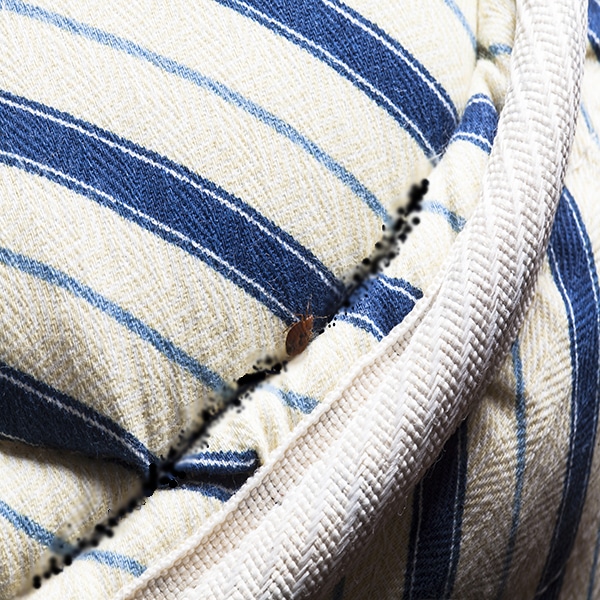
Black poo stains on your mattress or bed base can be a sign of bed bugs
Physical Evidence:
- Bed Bug Droppings: Tiny dark spots resembling ink stains.
- Shed Skins: Pale exoskeletons left behind as bed bugs grow, often found near seams, slats, and cracks.
- Blood Stains: Small rust-coloured or red marks on sheets or mattresses caused by crushed bed bugs after feeding.
- Bed Bug Bites: Red, itchy welts that often appear in lines or clusters on exposed skin after sleeping.
- Live Bed Bugs: Small, flat, brown insects about the size of an apple seed, usually hiding during the day.
Bed Bug Bites: What They Look Like and Why They Appear Overnight
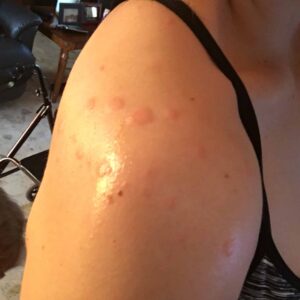
Bed bug bites on the shoulder often appear in small clusters or lines after sleeping.
Bed bug bites in Australia are often the first sign of an infestation. These bites typically occur at night when bed bugs are most active.
Bite Characteristics:
- Appearance: Red, itchy welts that may be raised or flat, often appearing in a line, cluster, or zigzag pattern where a bed bug has fed multiple times.
- Location: Bites usually show up on exposed skin such as the face, neck, shoulders, arms, and hands, areas not covered by clothing during sleep.
- Reaction: Reactions vary widely. Some people show no visible reaction at all, while others experience intense itching, swelling, or irritation that can last for several days.
Prevention Tips: How to Keep Bed Bugs Out of Your Home or Business
Keeping bed bugs out isn’t rocket science, but it does require awareness and consistency. Most infestations start quietly, so the goal is to spot problems early and reduce the chances of bed bugs settling in.
- Check Your Stuff: Regularly inspect mattresses, bed frames, headboards, and nearby furniture for droppings, shed skins, or live bugs, especially after travel or visitors.
- Cover Up: Use quality protective covers on mattresses and box springs to eliminate hiding spots and make early signs of bed bugs easier to detect.
- Vacuum Often: Vacuum floors, carpets, bed frames, and upholstered furniture regularly, paying close attention to seams, cracks, and areas around the bed.
- Declutter: Keep sleeping areas tidy and free from unnecessary items. Fewer belongings near the bed means fewer places for bed bugs to hide.
- Second-Hand Scrutiny: Carefully inspect second-hand furniture, bedding, clothing, and luggage before bringing them inside. Avoid placing used items directly on beds or sofas.
- Hot Wash: Wash and dry bed linens, curtains, and clothing on the hottest setting recommended for the fabric, especially after travel or suspected exposure.
- Seal It Up: Seal cracks and crevices in walls, skirting boards, bed frames, and furniture to reduce movement between rooms and neighbouring properties.
- Travel Smart: When staying in hotels, hostels, or short-term accommodation, inspect the bed and headboard before unpacking and keep luggage off the bed and floor.
How to Get Rid of Bed Bugs Fast Without Pest Control
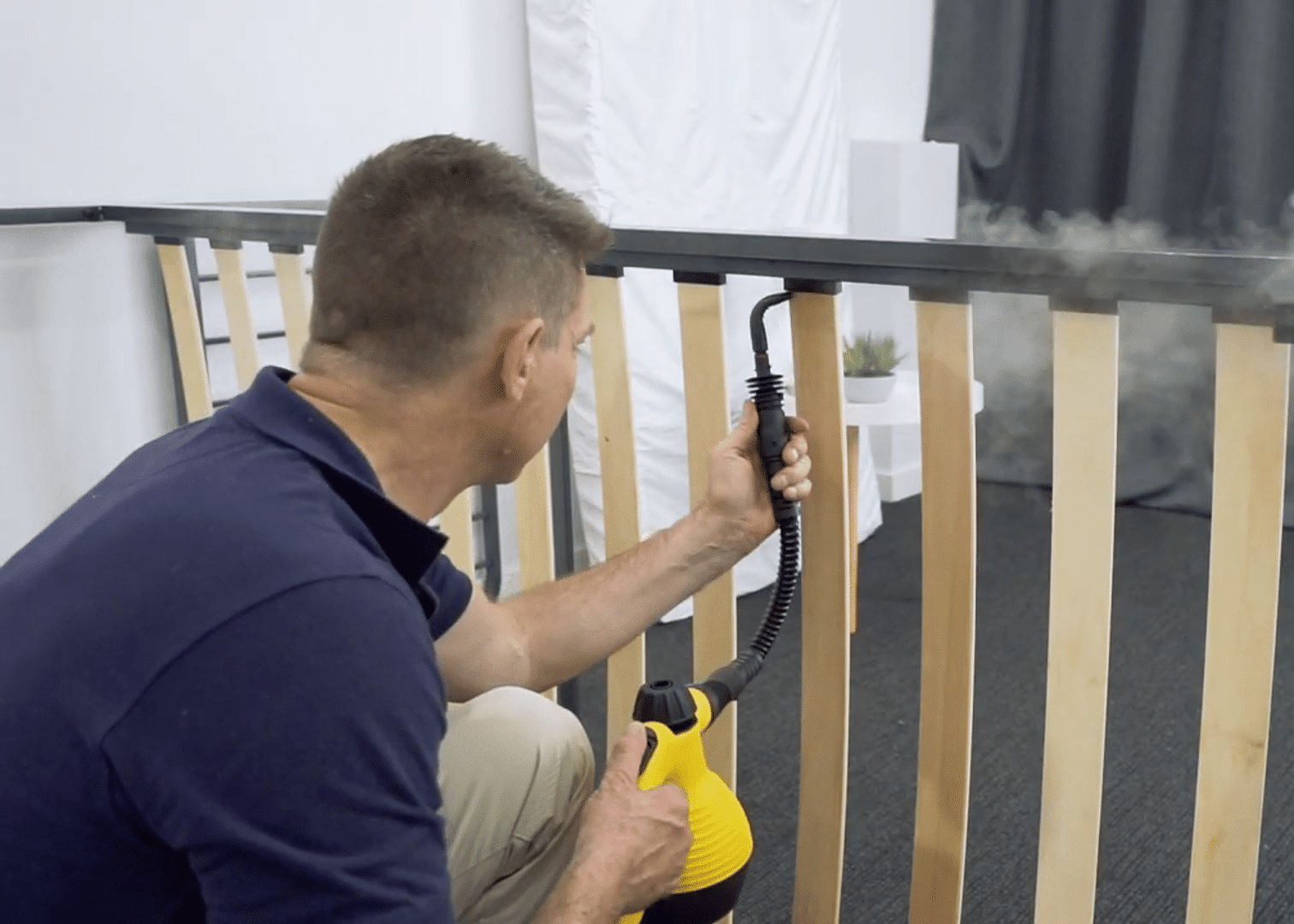
Steam kills bed bugs and eggs instantly on contact when applied to bed frames and cracks.
If you think you have bed bugs, don’t panic. You do not need to spray the whole room, throw everything away, or move out. The fastest and easiest solution is to isolate the bed and let the bed bugs come to you.
This is called the Isolation Method, and it works because bed bugs must reach the bed to survive. When the bed is sealed, treated, and protected, every bed bug in the room is eventually forced to cross the treatment and die. Just follow these three simple steps.
Step 1: Secure the Mattress
Start by sealing your mattress with a bed bug mattress cover.
- Zip it up fully and close the safety tab
- This traps any bed bugs already inside the mattress
- Trapped bed bugs die from starvation over time
- The smooth cover removes hiding spots and makes inspections easy
This step alone removes the mattress as a source of bites.
Step 2: Treat the Bed Frame or Ensemble Base
This step kills bed bugs instantly and sets up long-term control.
Ensemble beds:
- Stand the base on its end
- Remove the wheels
- Cover the entire base with a bed bug ensemble base cover
- Zip it closed
- Screw the wheels back in through the cover
Bed frames with slats:
- Use a bed bug steamer to steam the entire frame
- Focus on joints, cracks, screw holes, and crevices
- Remove the slats and steam both sides
Before putting the slats back:
- Apply bed bug killer powder to the frame and slats
- Use a duster for even coverage
- Lightly coat all surfaces, including undersides
Steam gives instant kill. The powder provides long-term protection.
Step 3: Set Up Bed Bug Barriers or Tape
This is what completes the Isolation Method. Once the bed is isolated, the only way bed bugs can reach you is via the bed legs. That’s where the barriers go.
- Screw-in Bed Bug Barriers
For ensemble beds with legs. Apply powder inside and outside the barrier and on the wheels. - Floor Bed Bug Barriers
Place each bed leg into the barrier tray and dust powder inside. - Bed Bug Barrier Tape
For square legs or legs larger than 65mm. Wrap the tape at the base and apply powder around the leg and floor.
Why the Isolation Method Works Better
- You only treat the bed, not the entire room
- No repeated spraying or room fogging
- No need to wash everything you own
- You can sleep in the bed the same night
- Every bed bug in the room is forced to cross the treatment
Final Tips
- Keep the bed at least 30cm away from walls and furniture
- Do not allow bedding to touch the floor
- The bed must be the only access point
Frequently Asked Questions: How Did I Get Bed Bugs?
- How Did I Randomly Get Bed Bugs?
Bed bugs are notorious hitchhikers. You can randomly get bed bugs from a variety of sources even if you haven’t been anywhere recently. They can latch onto your clothes, luggage, or personal items from public places such as buses, trains, and taxis. If you’ve had visitors, they might have unknowingly brought these pests into your home. Additionally, bed bugs can spread through shared laundry facilities or from neighbouring infested apartments through cracks in walls, floors, or ceilings. - How Did I Get Bed Bugs When I Haven’t Been Anywhere?
Even if you haven’t travelled or stayed in infested places, bed bugs can still find their way into your home. They can hitch a ride on second-hand furniture, clothing, or mattresses. Guests or delivery personnel who have been in infested areas might also bring them into your space. Bed bugs are also known to move between connected housing units, such as apartments or condos, through electrical outlets, pipes, or other openings in walls. - Are Bed Bugs Caused by Poor Hygiene?
No, bed bugs are not caused by poor hygiene. These pests are attracted to warmth and carbon dioxide, which humans naturally emit, regardless of cleanliness. While clutter can provide more hiding spots for bed bugs, they can infest even the cleanest of homes. Bed bugs are equal-opportunity invaders and their presence is not an indicator of poor hygiene. - Can Bed Bugs Come From Work?
Yes. Bed bugs can be picked up at work, particularly in shared environments such as offices, warehouses, staff rooms, lockers, or workplaces with shared seating. They can hitchhike home on clothing, bags, or personal items without being noticed, even if your home was previously bed bug-free. - Can Bed Bugs Come From Cars or Vans?
Yes. Bed bugs can live in cars and vans, especially in fabric seats, floor mats, and storage areas. If a vehicle is shared between multiple people or has transported someone with bed bugs, they can be carried into the home later on clothing or belongings. - Can Neighbours Cause Bed Bugs?
Yes. In apartments, units, and other connected buildings, bed bugs can spread from neighbouring properties through walls, ceilings, floors, electrical outlets, and plumbing gaps. This often happens when neighbours use sprays or foggers, which can force bed bugs to flee into nearby homes rather than eliminating them.
Are You Looking for an Organic DIY Bed Bug Treatment?
Watch Our DIY Treatment Video For An Ensemble Bed
Watch Our DIY Treatment Video For A Bed with Slats
If you have enjoyed our blog about, How did I get bed bugs?, then you might like to read about Bed Bug Sprays At Woolworths.
Sources: How Did I Get Bed Bugs?
Oxford Academic (Perspectives on Biology and Management)
National Library of Medicine (Clinical Relevance and Control Options)

Tony pioneered a non-toxic, eco-friendly solution for bedbug infestations. His innovation won the ABC TV show “The New Inventors” in 2009. In 2012, he successfully registered Diatomaceous Earth for bedbug control in Australia.





Alison says
Hi Tony, Where do I purchse the product you mention, Diatomacceous Earth? Is that the powder mentioned for eradication on line in all the links?
I have been bombing the room and want to be sure that I have killed everything before it is used again.
Thank you.
Tony Abrahams says
Hi Alison,
Yes, the powder you’re reading about is diatomaceous earth (DE).
We supply an APVMA-registered bed bug DE powder specifically labelled for bed bugs.
Also just so you know, room bombing won’t usually kill them all. It only affects the bugs it directly hits. The rest stay hidden and come out later.
DE works differently. Once applied in the right places, any bed bug that tries to reach the bed has to crawl through it and dies over the following days. That’s what actually clears the infestation, not trying to gas the room first.
Tell me what type of bed you have and I’ll guide you on exactly where to apply it.
Tony
Lorrie says
Thank you for the info it was very good alot of things I didn’t know
Tony Abrahams says
Hi Lorrie. Thanks so much for taking the time to say that. I’m really glad it gave you a few new things to think about. Bed bug stuff gets confusing fast, so it’s nice to hear when the explanations actually help. If you ever want me to break something down further, just let me know. Regards BBB